
Metroid is one of my favorite game franchises of all time. A classic series that defined a genre, and one that I feel is very underappreciated at times. Developed by the Nintendo Consumer Electronics Company, the metroid series follows the exploits of a bounty hunter by the name of Samus Aran, as she journeys from planet to planet completing contracts, fighting for peace, and exploring numerous different environments.
The games follow a style which is known today as “metroidvania”, a sub-genre of action-adventure games that hold a heavy emphasis on exploration and discovery. Typically, non-linear in nature, most games of this style require the player to find their own path around the world, opening up more paths as they gain abilities and grow more powerful. While not the first to adopt such a style, the metroid series is often seen as the largest influence for this type of game.
“The last metroid is in captivity. The galaxy is at peace…”
Super Metroid, 1994
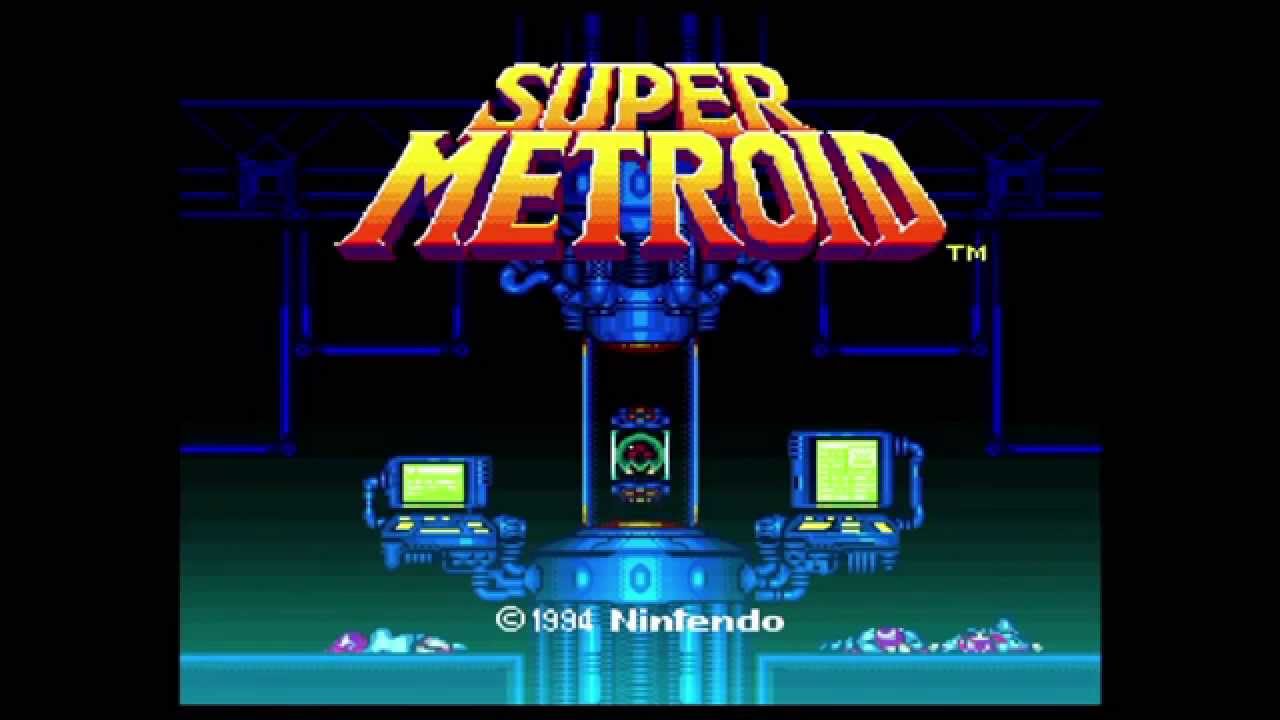
One game in particular that I want to focus on, is Super Metroid. Released in 1994 for the Super Nintendo Entertainment System (SNES), Super Metroid sets up with Samus shortly after the events of the second game, in which she was tasked with the extermination of the metroids on their home planet of SR388, a species of parasitic organisms that feed off the energy of living beings. Samus successfully eradicates the metroid population save for a single infant, which upon hatching takes to Samus as its own mother. Deciding to spare its life, she takes it to a research station for study of the organism’s energy producing qualities. Satisfied with a job well done, Samus takes her leave to seek a new bounty.
However, shortly after her departure the station is attacked by a group of space pirates, the species which serves as the main antagonistic faction of the series. This prompts Samus to return to the station, where she briefly does battle with Ridley: her nemesis and leader of the space pirates. Ridley steals the infant metroid with plans to weaponize it. Samus follows and tracks him to the planet Zebes, where the rest of the game takes place.
The Physics Behind The Game
Throughout her adventures, Samus relies on her power suit, an extremely advanced suit of armor which she can summon from thin air. The suit was gifted to her by the Chozo: a wise race of peaceful bird-like aliens that adopted Samus after she was orphaned in a space pirate attack on her home planet. Along with the gift of the power suit, the Chozo infused Samus their DNA, enhancing her strength, agility, and reflexes, all of which are further augmented by the suit itself.
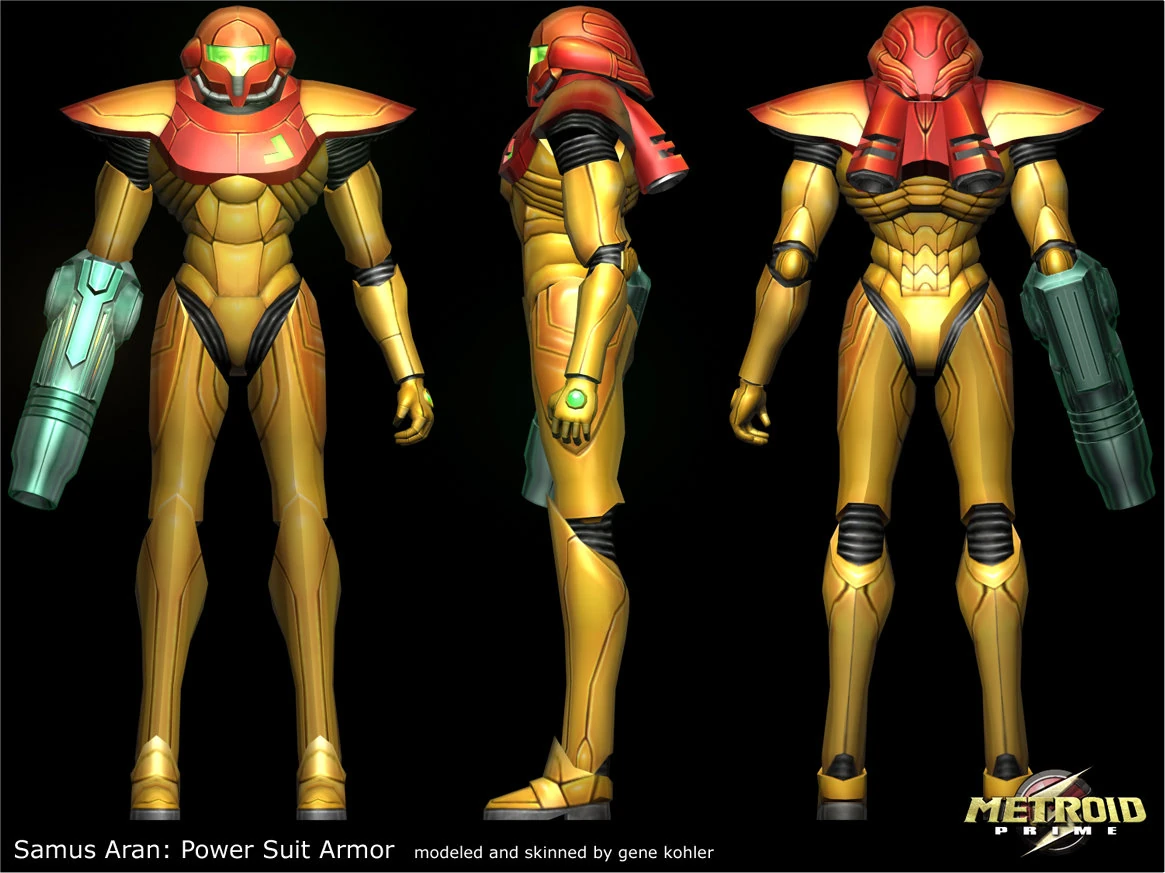
Samus Aran’s suit is unique in that it can be augmented and upgraded with a multitude of weapons and abilities. From her morph ball that allows her mobility in small spaces, to her ice beam that can freeze enemies in place: there is no doubt that Samus possesses an extremely deadly and versatile arsenal. My intent with this blog is to analyze the physics behind some of her abilities (namely the speed booster, ice beam, screw attack, and gravity suit) and see how they hold up against real world physics, as well as which of these abilities is most powerful based on their theoretical energy output. I chose these 4 in particular as I felt they would be the most interesting to examine and would add a decent amount of variety to the analysis (as opposed to something such as 4 beam upgrades or traversal abilities). I also chose to limit my analysis and observations to Super Metroid as much as possible due to the fact that the physics and in-game mechanics differ from game to game. Overall, I simply felt that it would be far less complicated and more precise this way. As for why I chose Super Metroid in particular, I believed it would be the most fun and the easiest to analyze. On top of that, it has always been one of my favourites and one of, if not the most popular of the franchise and is even regarded by some, as one of the greatest game of all time.
 The Physics of Super Metroid